About Considered Sources
Some of the articles on this site are about a film or a book or art, but most are about politics — the policies and agendas of elites but also of social movements and ordinary people, with a frequent focus on Chicago.
Politics, but also how it is represented. That is the point of the website’s name, Considered Sources. We have to consider the source because we can’t separate what we know from our sources, even if the sources escape us as if they were minor details. Maybe we only look at them when we have doubts and suspicions, but they are always shaping what we know, what we see and hear. We do better if we approach media, including news written in the objective style of the New York Times, aware that there is always a point of view and always values, always a frame and always a photographer choosing what is inside of the frame and what is left out.
Sometimes what is left out is most interesting and important, but for that we have to look around. It should be our normal practice to supplement the Times and NPR with alternative news sources, such as The Intercept, The Nation or Democracy Now; media criticism such as in Fairness and Accuracy in Reporting (FAIR); or the scores of podcasts which interview the newsmakers left out of the mainstream reporting or left in with token presence.
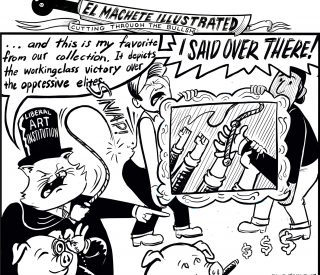
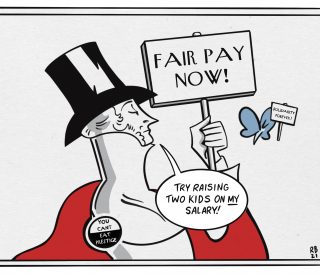
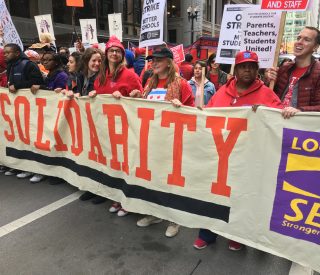
Considered Sources occasionally will look at a movie or photograph or poem, which sometimes can take us into the history beneath the myths and platitudes. Images matter — they are some of the most powerful sources, often unforgettable. When they are used as illustrations, they should be more than decoration. They are all interesting in themselves, telling their own stories, but they should also add to our story and at best make a comment about it that you can take home with you.
I make no claim to originality or deep thinking. My approaches will be familiar to anyone who studies media — for example, questioning “objectivity,” agenda setting, priming and framing. I hope my articles will be useful to you for their many links to more expansive discussions by professionals and, especially, to the work of the people who taught me what I know. One role of criticism is to introduce readers to the best that is out there.
About Paul Elitzik
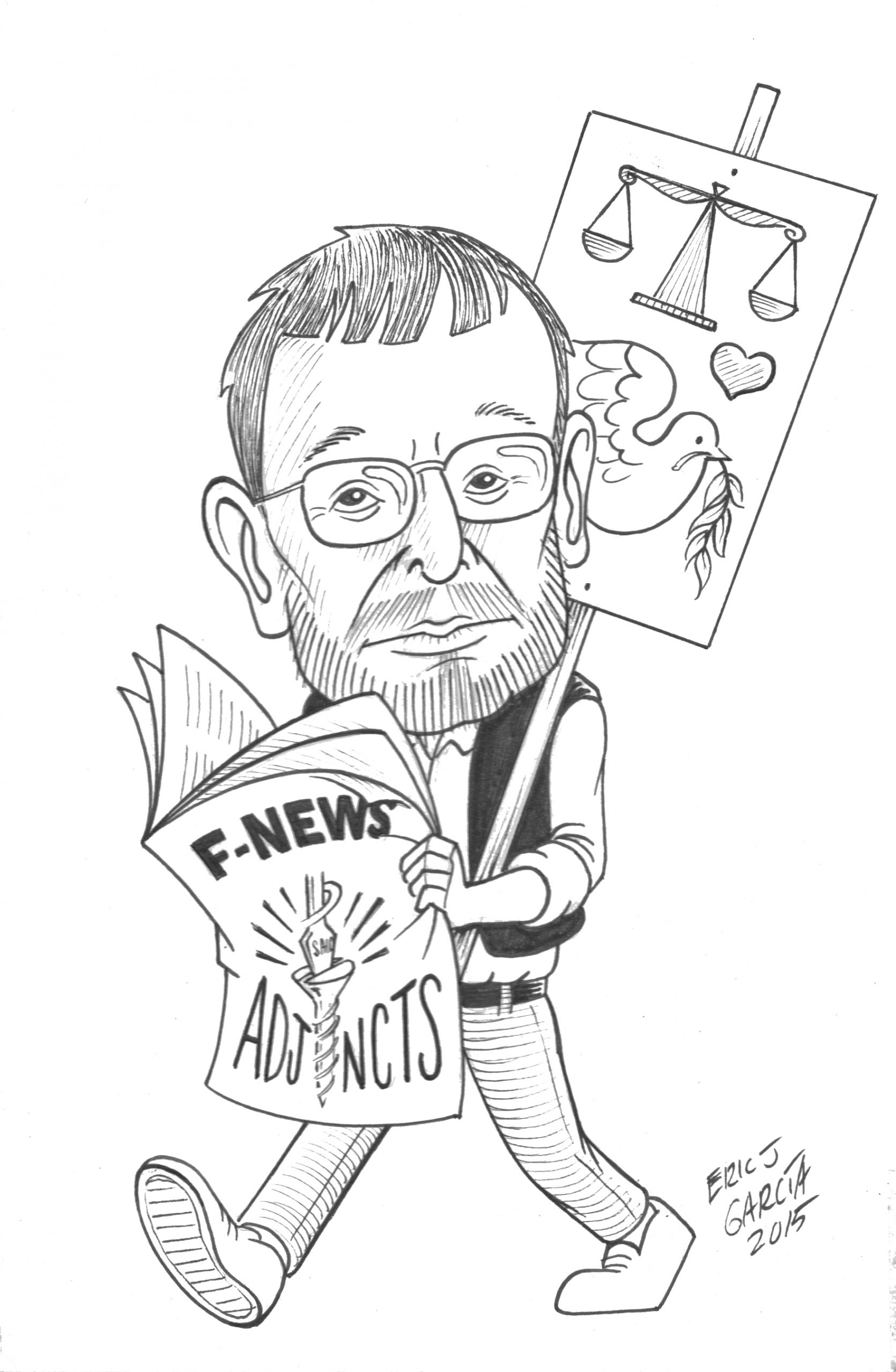
I have been teaching journalism and media at The School of the Art Institute for over thirty years. There I am proud to have worked with brilliant writers and designers on the award-winning student newspaper. In other lives, I was a classicist, an activist, and an editor and publisher. I edited and published books by Jan Myrdal, John M. Hagedorn, Harry Mark Petrakis, and books on film from Cineaste magazine’s editors. Most of these are available now from University of Minnesota Press, which took them when I ended my work as a publisher (my imprints were Lake View Press and Ravenswood Books).
I encourage you to read these books — I am proud to have published them and to have worked with their authors.
- India Waits
- Confessions of a Disloyal European (reprint)
- Childhood
- Another World
- Twelve Going on Thirteen
- People and Folks: Gangs, Crime and the Underclass in a Rustbelt City
- Forsaking Our Children: Bureaucracy and Reform in the Child Welfare System
- Female Gangs in America: Essays on Girls, Gangs and Gender
Also:
Harry Haywood: Black Bolshevik: Autobiography of an Afro-American Communist (distribution; later edited in a shorter version by Gwendolyn Midlo Hall and published by University of Minnesota Press, A Black Communist in the Freedom Struggle: The Life of Harry Haywood)
Solidarity Forever: An Oral History of the IWW, edited by Dan Georgakas, Stewart Bird and Deborah Shaffer
Contact
Your comments, criticisms, cries of outrage and despair will have a place in the comments section, or you can email me at paul[at]consideredsources.com
—Paul Elitzik
Terms of Use
All articles by me may be reprinted under this Creative Commons license: Attribution-NonCommercial-NoDerivatives 4.0 International (CC BY-NC-ND 4.0).
Be careful not to reprint images covered by copyright. Note the licensing information in my captions.
I have made every effort not to use images restricted by copyright. All are either in the public domain, licensed through Creative Commons, or are used with permission. Any concerns can be sent to me at paul [at] consideredsources.com.
As a courtesy, please inform me of any re-use and provide the url if you republish on the web.
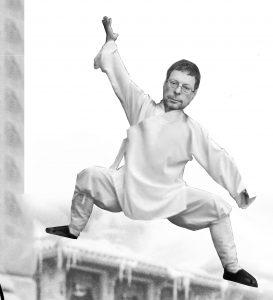
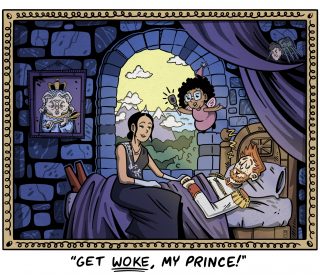
Caught in mid-flight at the Shaolin Temple. (Apparently, this is how I look to Allison, who may be too easily impressed.) Illustration by Allison O’Flinn.