
In this post:
-

The scandal the Clinton machine couldn’t suppress! Anonymous sources will never be silenced!
Explaining the Clinton scandals
- Broader context: Trust, politicide and the battle for symbolic power
- Strange historical analogy that explains a lot: the role of political pornography in the French Revolution … illustrated! (Trigger warning on those illustrations: scurrilous misogyny, yet fun to some because they target royalty.)
- Is there any hope of winning against scandal politics?
Hillary Clinton and the Democrats lost for a variety of reasons, but Hillary Clinton and many others blame FBI Director Comey’s announcements in the last weeks that reminded people of the email scandal. The loss was narrow, so this and many different explanations people advance are correct in part. But let’s narrow the question to those 12% of the voters who were undecided in the last weeks – and especially those among fewer than a hundred thousand whites who voted for Obama twice but for Trump this time: Like 62% of voters, they said Clinton was untrustworthy.
But why did scandals sink Clinton and not Trump, who is a defendant in at least 75 open court cases — who committed fraud with Trump University, used foundation funds for personal legal fees, cheated the IRS with a phony net operating loss of almost a billion dollars, not to mention wide-ranging hate speech and sex scandals as bad as Bill Clinton’s? Why Hillary and not Donald?
Here too there is more than one explanation, but let’s look at scandal in a broader context — scandal as a preferred weapon in political warfare. And in particular, scandals involving powerful women … are powerful weapons.
“Indeed, anywhere we look into the history of societies around the world, the politics of scandal is a more rooted and typical form of power struggle than the conduct of orderly political competition as per the rules of the state.”—Manuel Castells, Communication Power (2009), p. 242.

The media attack on Hillary Clinton transcends the emails, Benghazi, and the Clinton Foundation. Even in the mainstream, Hannity’s viewers and NY Post readers are treated to references to Bill’s trips to “billionaire pedophile Jeffrey Epstein’s orgy island” (Trump also went to his parties, but who cares?). Right-wing and social media say the Clintons were involved in cocaine trafficking and murders in Arkansas; of course Whitewater and the murder of Vince Foster; and, with framing especially directed at feminists, Hillary’s alleged attacks, as a defense lawyer, on a 12-year old rape victim, her enabling of Bill’s affairs and sexual assault, and public attacks on the accusing women. She is a traitor also, not just for Benghazi, but also for her close association with her “body woman … her traveling chief of staff,” Huma Abedin. With whom she had an affair and who has terrorist ties.
She is also a Satanist … Trump called her “the devil,” and that was going to be taken seriously by many. Ben Carson elaborated that Hillary’s mentor was Saul Alinsky who dedicated his “Rules for Radicals” to Lucifer (“the first rebel”). Hillary is the “high priest” and “goddess of this occult, Satanic, shadow group” (because John Podesta was invited to a “spirit cooking” by performance artist –no, “top occultist” – Marina Abramovic). One third of Trump voters told Public Policy Polling they believed Clinton had ties to Lucifer. (OK, I’m not sure the pollsters believed that answer … entirely; they are known for asking odd questions.)
Is there any reason for progressives to take seriously this raw material for late-night comics? Yes. They all take on new life as they spread through social media and over years spread the miasma of suspicion around the Clintons.
Wars of symbols: Demonization makes scandals stick
Blaming FBI Director Comie is fair, but it is also, on Clinton’s part, self-serving and misses the point of scandal politics.
In politics scandal has less to do with any particular charge, than with a constellation of grievances, not all involving the target. The target takes on a symbolic meaning and the scandal assault effectively brands and demonizes her. Political leaders require trust, the crucial component of legitimacy and the right to rule, and demonization, aiming at the total destruction of the target, destroys trust and legitimacy: This is politicide.
“Scandals are struggles overs symbolic power in which reputation and trust are at stake.” —Thompson, 2000: 245. Political Scandal: Power and Visability in the Media Age, via Castells.
Clinton was despised not only on the right, and not only or even mainly for the appearance of wrongdoing in the emails, Benghazi or the Clinton Foundation. Her vulnerability was Trump’s strength: She embodied the financial and corporate rule that took away hope from the whites who were losers in the globalized economy. This was effective framing, branding her as the greedy, dishonest politician who was part of the establishment responsible for all that white workers and small businesspeople had lost. By the time the demonization is accomplished, the scandal reveals her secret self to the public and the details, the evidence, have become irrelevant and have been forgotten.
For a key voting block, scandal stuck to Clinton and not Trump
The cultural dimension of this loss of hope was summed up in Trump’s attack on “political correctness,” understood by his listeners to mean the new language and the new norms of gender equality and multiculturalism; that was Hillary’s brand, summed up in her slogan “Stronger Together.” Clinton voters believed the Trump scandals, and Trump voters believed the Clinton scandals; but it was just one segment of white Trump voters whose beliefs mattered most. For that crucial segment of white Obama voters who chose Trump in three swing states, the scandals stuck to Clinton because she embodied the discredited past; she embodied the elites responsible for their loss of jobs and the decline of their communities. They didn’t worry about Trump’s scandals because he offered hope and gave voice to their grievances; he and not Clinton was the “change agent.” This time the “hope and change” candidate was a racist, misogynist and fascistic narcissist.
What was the role of misogyny in demonizing Clinton?
Clinton’s candidacy was a symbolic outrage: a powerful woman who defied sexist limitations and asserted herself as a feminist icon (her anti-Trump ads claimed the future for feminism, showing him as the bad model, her as the good model for our children). Her demise may become a classic case of political scandal destroying a powerful woman.
Let’s look at another classic episode, showing how scandals can delegitimize the rulers, turning transgressive sexual narratives into cosmic gender outrage, demonizing a powerful woman to the point where any rumor of a sex crime would be believed … and leading to the goal of political scandal, utter destruction for her and her class.
Octavian’s propaganda campaign against Marc Antony: He’s a traitor to Rome! He’s consorting with that incestuous, animal-worshipping, drunk and drugged-out Oriental witch whore Cleopatra! Sir Lawrence Alma-Tadema, “The Meeting of Antony and Cleopatra.” 1883. Wikimedia Commons.
No, that’s enough Cleopatra.
Let’s look at Maria Antonia Josepha Joanna von Österreich-Lothringen, who became Marie-Antoinette. She was a target of choice for the hundreds of pamphleteers eroding the legitimacy of royalty and the nobility with pornographic narratives and obscene caricatures. The pamphlets, called libelles, illustrated with obscene copper engravings that showed them in any imaginable sexual position and combination, were smuggled in from England, Holland, Rhineland, Switzerland. This is not a widely known aspect of the revolution, perhaps because of persistence of conventions in the discourse of sexuality, and perhaps because it was not explicitly ideological … or blood-spattered.
The underground hacks, educated and with a visceral hatred of the regime which denied them respectability and condemned them to poverty, insulted and ridiculed the nobility. Marie-Antoinette was depicted visibly bored by the King’s flaccid member; groped by his brother as he watched ineffectually; engaged in threesomes; playing with sex toys and servants; in the arms of her lesbian amour the Duchess of Polignac; gazing on her lover Lafayette mounted on a noble steed shaped like a monster dildo. All of this caricatured in engravings,displaying the decadence of royalty. The sexual deviance and exhibitions of opulence titillated and enraged readers, passing on to a mass audience Enlightenment values and rejection of the ancient regime in a form more accessible than Diderot or Voltaire. These lumpen-philosophes were called Rousseaus du ruisseau, or “Rousseaus of the gutter.”
[Note: Click to enlarge the images; and captions for the images may not appear on your device; I repeated them just below the images.]
-
 The source of the problem: Le Roi is impotent, la Reine is disgusted. From Les fureurs utérines de Marie-Antoinette, femme de Louis XVI.
 -
 Louis discovers the queen with his brother. If le cocu can't rule his wife, how can he rule France? 1793.
 -
 The queen with Lafayette, hero of the American Revolution.
 -
 The queen with her confidantes.
 -
 From "Le triomphe de la fouterie."
 -

-
 "A people is without honor and deserves its chains when it bows down before the scepter of queens."
 -
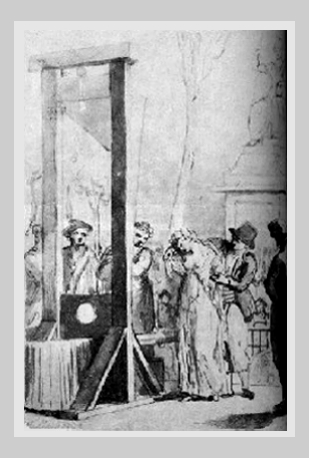
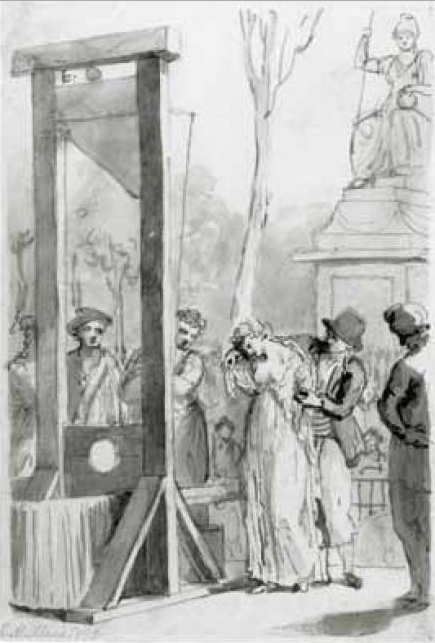
 From "lock her up" to "off with her head."
 -
 The Murder of the Princesse de Lamballe, another accused lover of the queen.


Click to enlarge. From left to right, from top: 1).The source of the problem: Le Roi is impotent, la Reine is disgusted. From “Les fureurs utérines de Marie-Antoinette, femme de Louis XVI.” 2). Louis discovers the queen with his brother. If le cocu can’t rule his wife, how can he rule France? 1793. 3). The queen with Lafayette, hero of the American Revolution. 4). The queen with her confidantes. 5). From “Le triomphe de la fouterie.” 6). With the Duchess of Polignac. 7). “A people is without honor and deserves its chains when it bows down before the scepter of queens.” 8). From “lock her up” to “off with her head.” 9). The Murder of the Princesse de Lamballe, another accused lover of the queen.
And the role of misogyny?
Did the readers believe this satiric hyperbole? Once the targets are demonized, all of the accusations are as good as true. The pornographic scandals are metaphors for the treasonous decadence of the ruling class. Everyone knows they are degenerates, so of course this is the sort of behavior we expect from them.
Whatever the truth of the stories, they were the pretext for eruptions of ferocious and violent misogyny. For example, in the September Massacres of 1792 the queen’s putative lover, the Princesse de Lamballe, was seized by the crowd, beheaded, the body was stripped and mutilated, and the crowd tried to bring her head on pike into the palace to make the queen kiss her lover.
The slanders of the libelles were used in Marie-Antoinette’s trial, where she was even accused of molesting her eleven-year old son, an act of treason because it was constructed as an attempt to weaken him and subject him to their influence. The French revolutionaries, like the Trumpenproletariat, yelled “lock her up”; and then they yelled “off with her head.” The royalists dismissed the stories as calumnies, the revolutionaries believed them all.
Olympe de Gouges (Marie Gouges), revolutionary feminist, executed by the Jacobins in 1793. By Charles-Joseph Mettais. Wikimedia Commons.
It was a sad combination of revolutionary demystification … and misogyny. The other side of the titillation in the libelles was their patriarchal moralizing. Marie-Antoinette, like Mme du Barry before her, outraged her subjects because she was a woman who ruled her king. Later, in the revolution, rebellious women were taught their place: The revolutionaries outlawed the women’s organizations. Among the executed revolutionaries was Olympe de Gouges, who wrote the Declaration of the Rights of Woman and the Female Citizen.
“The truth is out there!”
Scandal exploits our suspicions and desires. We suspect our oppressors of every crime against decency, and we long to know the truths that scandals expose. Humans always fear they are living in a world of illusions and long to see the reality that lies behind them; so we need religion, philosophy, and science (and conspiracy theory); and we need scandal. You may find policy debates in the elite media, but in the mass media it’s all about character. We must know who they really are, and the scandals show them to us in their essence.
Is there any hope of winning against scandal politics?
Is scandal inevitable and inseparable from politics? Political systems require trust, and so when power resides in individual leaders, dissenters and rivals will compete by attacking their integrity. Elections in the US are a natural environment for scandal — popularity contests requiring the trust of both voters and billionaire donors; a media centered on celebrity and personality; and a patriarchal culture with its longing for the strong leader who will fix everything.
How do we fight it? Bernie Sanders showed it was possible to finance a viable presidential campaign independent of the donor class and despite media marginalization. But he was also relatively ignored by the right-wing attack machine. If he had won the nomination, he would certainly have been the target of a personalized ideological onslaught, funded by billionaires, coming from both the right and the liberal media; he may also have gone the way of populists in the past, gradually absorbed into the party and conventional politics.

Occupy Wall Street survived ridicule and lies; a movement can reframe the national conversation. OWS changed the conversation to focus on inequality. Photo by David Shankbone, Wikimedia CC by 3.0.
What about when the challenge to power resides not in individual leaders and conventional political parties but in mass social movements? In the thirties and the sixties, powerful political and cultural forces were brought to bear against the movements, activists were singled out and attacked, media demonized them, but the movements prevailed. Slander, demonization and the weapons of elite culture war were no match for them, not for years, because the movements were more than their leaders, more than their parties and organizations. They were broad and deep cultural forces that occupied the public sphere and changed the way people thought and felt.
Let’s end with these images, in the spirit of our scandalous and conspiratorial times:



Just after posting this piece on the politics of scandal, i saw today’s NY Times article: “This Pizzeria Is Not a Child-Trafficking Site … Comet Ping Pong was the home base of a child abuse ring led by Hillary Clinton and her campaign chief, John D. Podesta.”
So why Hillary and not Trump? Trump was surely a better target for scandal — his whole life is one scandal after another. However, as in the French Revolution, misogyny is an effective form of demonization best aimed at elites and their defenders. Hillary represented the status quo and as a woman, was the perfect Marie Antoinette unconcerned with the “deplorables.”
You are right that Bernie would also have been also demonized, but the first woman candidate for president was a better, or maybe best, target. You might have asked whether Trump’s tactics would have worked against Obama? There were many racist epithets thrown in 2008 and 2012 but they were not as effective as Trump’s put downs. Obama, though black, was seen as a change agent. Will Trump’s misogynistic scandal tactics work against “Pocahontas”? My guess in 2020 the “scandal sandal” will be on the other foot.
I fear the lessons of this campaign are consistent with Castells’ view of the centrality of scandal to modern politics.
[…] On why Trump was able to use the scandals to demonize Clinton; […]